Our new ‘World Cup Fantasy Toolkit’ page has lots of useful information for 2026 FIFA World Cup Fantasy managers – including clean sheet odds.
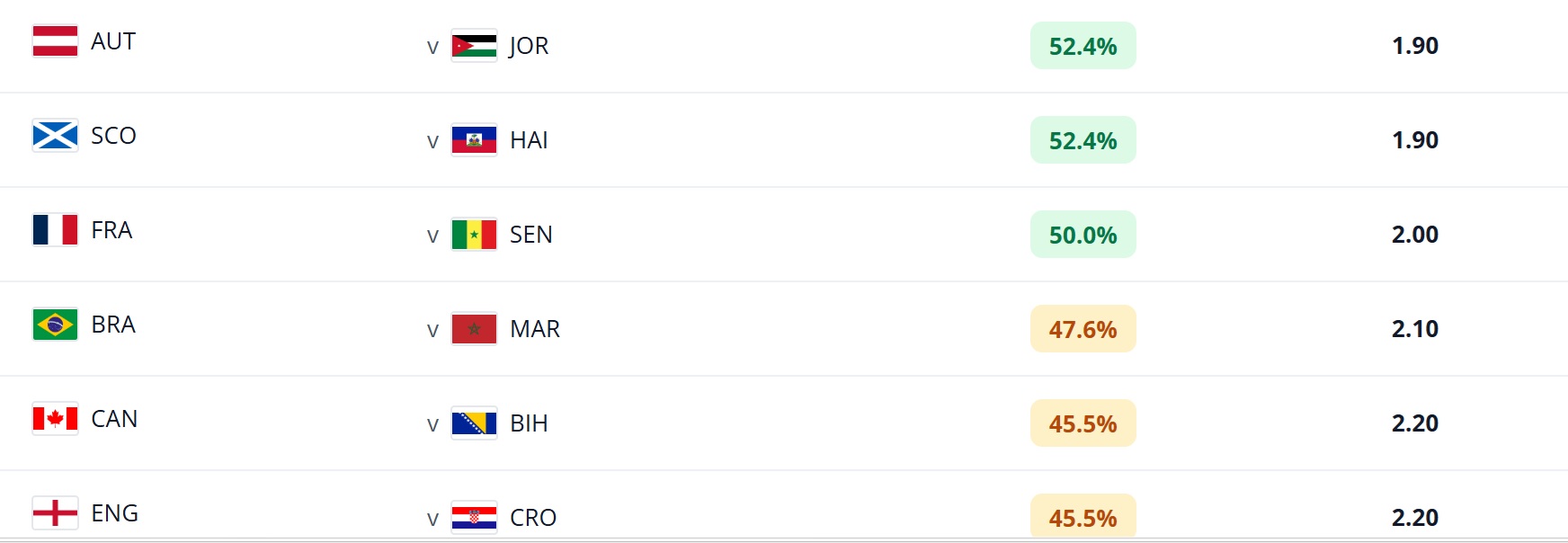
Here, we look at the teams with the best clean sheet odds in Round 1. At least, that’s what the bookies think.
These numbers are provided by Sportsmonks.
WORLD CUP FANTASY – ROUND 1: BEST CLEAN SHEET ODDS
Not surprising to see German top of the clean sheet pile for Round 1. Team facing the third-bottom ranked nation in the World Cup, tournament debutant Curacao.
Julian Nagelsmann’s men have kept clean sheets in five of their last seven matches. Although the caliber of the opposition must be taken into account (Slovakia, Finland, Northern Ireland, Luxembourg x2), many of the countries above are above Curacao in the world rankings.
Dick Advocaat’s minnows were top scorers in the third round of CONCACAF qualifying – but 10 of their 13 goals were scored against group minnows Bermuda.
Spanish follow next on the list. They face another World Cup newcomer, Cabo Verde.
Of the nine African qualifying group winners, Blue Shark is the second lowest scorer.
Spain itself has kept clean sheets in seven of its last eight matches.
The other ten countries have a clean sheet chance of between 50% and 60%.
However, this figure is below this threshold Brazil And English. Both countries underwent the toughest test on paper in Round 1.
Selecao face Morocco, who sit in a best-eighth position in the FIFA World Rankings.
The North African nation also had a superb 2022 World Cup, finishing fourth, and ‘officially’ won the Africa Cup of Nations in January.
Meanwhile, England will face old foes Croatia, ranked 11th in the world and themselves semi-finalists at the last World Cup. They are an aging squad – but we already said that in 2022!

PakarPBN
A Private Blog Network (PBN) is a collection of websites that are controlled by a single individual or organization and used primarily to build backlinks to a “money site” in order to influence its ranking in search engines such as Google. The core idea behind a PBN is based on the importance of backlinks in Google’s ranking algorithm. Since Google views backlinks as signals of authority and trust, some website owners attempt to artificially create these signals through a controlled network of sites.
In a typical PBN setup, the owner acquires expired or aged domains that already have existing authority, backlinks, and history. These domains are rebuilt with new content and hosted separately, often using different IP addresses, hosting providers, themes, and ownership details to make them appear unrelated. Within the content published on these sites, links are strategically placed that point to the main website the owner wants to rank higher. By doing this, the owner attempts to pass link equity (also known as “link juice”) from the PBN sites to the target website.
The purpose of a PBN is to give the impression that the target website is naturally earning links from multiple independent sources. If done effectively, this can temporarily improve keyword rankings, increase organic visibility, and drive more traffic from search results.